Carpet Care 101: How to Extend the Life of Commercial Carpets
Replacing commercial carpet costs $4 to $10 per square foot. A real carpet care program costs a fraction of that and doubles useful life. Here is how to build one.
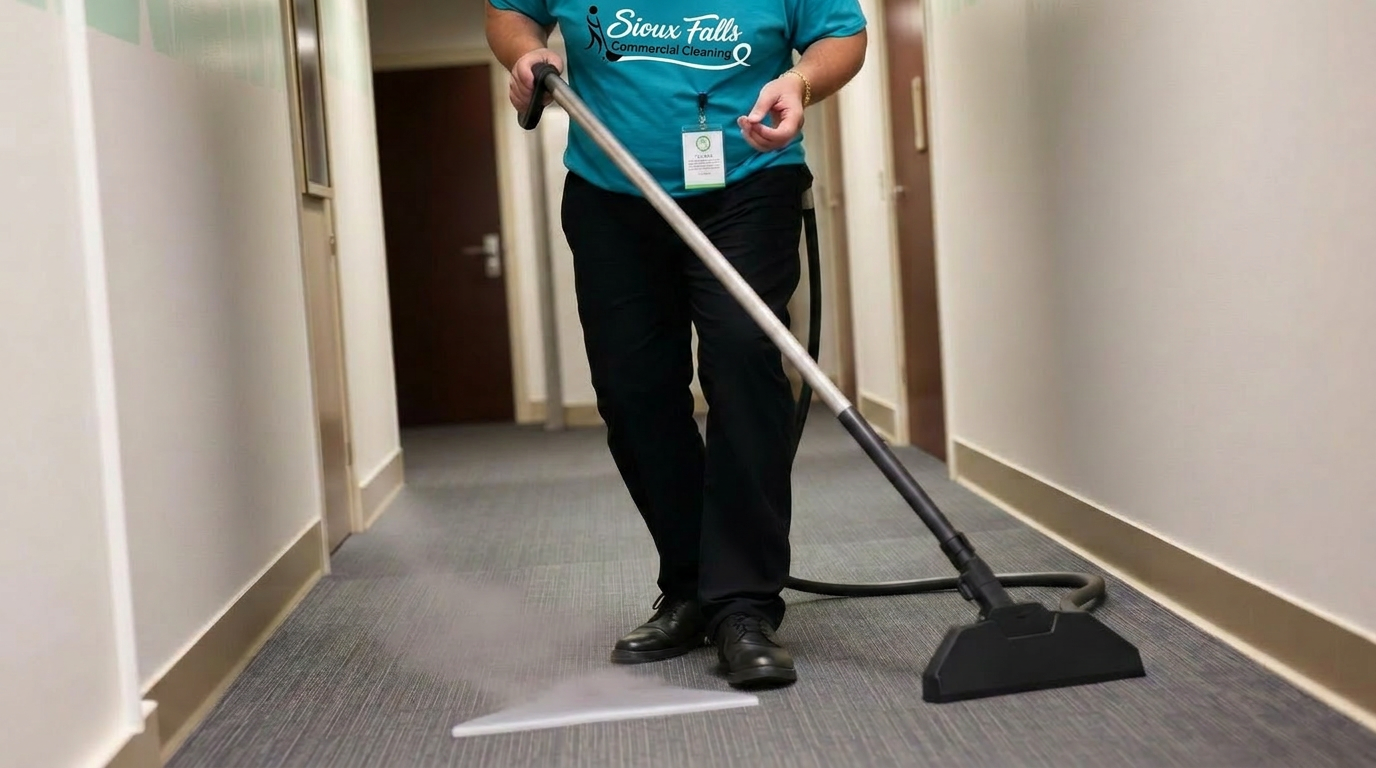
Commercial carpet is one of the most expensive surfaces in a typical building and one of the most neglected. Replacing it costs four to ten dollars per square foot installed, plus the disruption of having your office torn up for a week. A real carpet care program — vacuuming, interim cleaning, extraction, and spot response — costs a small fraction of that and can double the useful life of the carpet you already have.
This article walks through what a real commercial carpet care program looks like, what most facilities get wrong, and how to think about the schedule for your building.
Why carpet fails
Commercial carpet does not fail randomly. It fails in predictable patterns, and almost all of them are preventable.
The most common failure mode is matting and crushing in traffic lanes — typically the path from the entry to the main work areas, and the path from the work areas to the restrooms and breakroom. The carpet fibers get walked down, the loft is lost, and the carpet looks dingy even when it is technically clean.
The second most common is soiling buildup. Carpet acts as the largest air filter in your building. Particulates settle into it constantly. Without regular vacuuming and periodic extraction, those particulates abrade the fibers from the inside every time someone walks across it. The carpet wears out from within.
The third is stain setting. A spill that is not addressed within hours often becomes permanent. Most "permanent" carpet stains we see in commercial buildings are stains that were not pre-treated promptly because nobody on site knew the protocol.
All three failure modes are addressable with a basic program. None of them require exotic equipment or premium chemistry. They require schedule and consistency.
The four-layer carpet program
A real commercial carpet care program has four layers, each with a different cadence.
Layer 1: Daily vacuuming with the right equipment
The most important layer is also the cheapest. Daily vacuuming with a commercial-grade upright that has a beater bar and HEPA filtration removes the particulates that are doing the structural damage to your carpet fibers.
Most office vacuums fail this test. The bagless plastic uprights from a big-box store are not appropriate for daily commercial use — the filtration is poor, the agitation is weak, and the motors burn out in months. A real commercial vacuum costs $400 to $800, has a sealed HEPA filter, and lasts for years.
Daily vacuuming should focus on the traffic lanes and the first ten feet of every entrance. Full-room vacuuming can run on a less frequent schedule (twice a week is common) but the traffic lanes need attention every visit.
Layer 2: Spot treatment protocol
Every cleaning crew working in your building should be trained on a simple spot treatment protocol: identify the spill quickly, blot (do not rub), apply an appropriate neutral spotter, blot again, and rinse with water. Most "permanent" stains are the result of a crew that did not know the protocol and either ignored the spill or used the wrong product.
We provide a laminated spot guide for every building we serve, posted in the janitorial closet, in English and Spanish. It costs us almost nothing. It saves clients thousands of dollars per year in avoided carpet replacement.
Layer 3: Interim cleaning (encapsulation)
Encapsulation is a low-moisture cleaning method that uses a polymer-based cleaner applied with a counter-rotating brush machine. The polymer encapsulates the soil particles, dries to a crystalline form, and is vacuumed up over the following few vacuum cycles.
The advantage of encapsulation over hot-water extraction is that it dries in 30 to 60 minutes (versus 8 to 24 hours for extraction), and it does not push soil down into the carpet backing. It is the right tool for refreshing traffic lanes between full extractions, and for buildings that cannot give up rooms for a full day.
A typical office benefits from encapsulation cleaning of traffic lanes every 60 to 90 days.
Layer 4: Hot-water extraction (deep clean)
Hot-water extraction — sometimes called "steam cleaning," though it is not actually steam — is the deepest level of carpet cleaning. A truck-mounted or portable extractor injects hot water and detergent into the carpet under pressure and immediately vacuums it back out, pulling soil with it.
Extraction is what removes the soil that has accumulated below the surface of the carpet fibers. It is the only method that genuinely deep-cleans the carpet. It is also the method that takes the longest to dry — which is why scheduling matters.
Most commercial carpets benefit from extraction every 6 to 12 months, depending on traffic and industry. Medical, dental, and childcare environments may need it quarterly. Light-traffic professional offices may stretch to annual.
Common mistakes facility managers make
Mistake one: over-extracting. Hot-water extraction every quarter sounds aggressive, but in some buildings it actually causes faster wear by keeping the carpet wet too often and contributing to wicking. Most offices do not need more than two extractions a year.
Mistake two: skipping interim cleaning. Facility managers often go straight from "daily vacuuming" to "annual extraction" with nothing in between. Six months of accumulated soil between extractions is hard on the carpet. A 90-day interim cleaning of the traffic lanes makes a dramatic visual difference and substantially extends carpet life.
Mistake three: ignoring the entry mat program. The single highest-leverage thing you can do for carpet life is install a proper entry mat system. Industry research suggests that the right entry mat captures 80% of the soil that would otherwise enter the building. Mats should be at least 12 feet long total, in two stages (scraper mat outside, wiper mat inside), and they should be cleaned or replaced regularly.
Mistake four: cheap chemistry. Discount carpet shampoos often leave a sticky residue that attracts soil. Carpet that has been cleaned with cheap chemistry actually gets dirty faster than carpet that has not been cleaned at all. A real carpet care program uses neutral, low-residue cleaning chemistry from a reputable manufacturer.
Mistake five: not scheduling. Carpet care that happens "when we get around to it" never happens. It needs to be on the calendar, with the cleaning vendor responsible for executing on the schedule and reporting back.
Building your carpet care plan
Here is the basic program we recommend for most Sioux Falls offices:
- Daily: vacuum traffic lanes with HEPA upright
- Weekly: full-room vacuum of all carpeted areas
- As needed: trained spot response within hours of any spill
- Every 90 days: encapsulation cleaning of traffic lanes and any visible soil zones
- Every 12 months: full hot-water extraction of all carpeted areas
For higher-traffic buildings or specific industries, the cadence tightens. For lighter-traffic professional offices, the encapsulation cadence can stretch to 120 days.
A budget framework: for most offices, the recurring carpet care line item lands somewhere between $0.15 and $0.40 per square foot of carpet per year, all-in. For a 10,000 square foot office with 7,000 square feet of carpet, that is $1,050 to $2,800 per year. Compare to the cost of replacing that carpet ($35,000 to $70,000), and the math is obvious.
What to ask your cleaning vendor
If your cleaning vendor does not currently include a carpet care plan in your scope, here are the questions to ask:
- What carpet care frequency do you recommend for our space, and why?
- Do you do interim cleaning (encapsulation) in addition to extraction?
- What chemistry do you use on our carpets? Can I see the manufacturer's data?
- What is your spot response protocol? How are the crews trained?
- Do you provide drying time and access guidance after extractions?
- Can you put together a written schedule for our building?
A vendor with real expertise will answer these crisply. A vendor that has never thought about carpet as a system will get vague.
A note on entry mats
We mentioned entry mats above, and they deserve their own short note. The single most undervalued investment in commercial floor care is a high-quality entry mat system. A scraper mat at the exterior (textured rubber or aggressive bristle) followed by a wiper mat inside the door (high-pile absorbent) captures soil and moisture before it enters the building.
The best mats are owned, not rented. Rental mats are convenient but often arrive dirty (the rental cycle is faster than the deep cleaning cycle), and over time you pay more than you would have for ownership. A high-quality owned mat lasts five to seven years and pays back in carpet life within the first year.
For Sioux Falls buildings specifically, the mat system needs to handle the unique combination of snow melt, road salt, and grit that comes through the doors from October through April. That means longer mats than would be appropriate in milder climates, and a more aggressive cleaning cadence for the mats themselves.
The bottom line
Commercial carpet is an asset, and assets need maintenance schedules. A simple, consistent carpet care program extends the life of your carpet by years and dramatically improves how your space looks every day. The cost is small. The savings are large.
If you would like a written carpet care recommendation for your building — including the right frequency, the right chemistry, and a budget framework — we are happy to put one together. We will walk the space with you, look at the current carpet condition, and give you a plan in writing.
Need a cleaner you can actually count on?
Walk your building with us and get a written, flat-rate quote inside one business day.
Get a free estimateKeep reading