How a Cleaner Office Actually Boosts Employee Productivity (and Pays for Itself)
A clean office is not a soft perk — it is a measurable productivity lever. Here is what the research shows, what most Sioux Falls businesses get wrong, and how to calculate the ROI of your cleaning program.
Most facility managers know intuitively that a cleaner office feels better to work in. What fewer people realize is how directly cleanliness shows up on the line items leadership actually pays attention to: sick days, retention, recruiting, productivity per square foot, and customer perception. When we walk into a new prospect's office in Sioux Falls, the first thing we are really looking at is not the dust on the baseboards — it is how much money the current state of the building is quietly costing the business every single week.
This article is a practical look at the relationship between commercial cleaning and productivity. We will pull together what the research says, what we see in the field, and a simple framework you can use to model the return on investment of upgrading or right-sizing your cleaning program.
The hidden cost of a dirty office
The cost of a poorly cleaned office is rarely a single dramatic number. It is a thousand small frictions. An employee who avoids the breakroom because the microwave is sticky. A salesperson who routes a prospect around the back entrance because the lobby is cluttered. A developer who loses fifteen minutes a day because the HVAC vents are pushing dust onto their keyboard and they keep stopping to clean it. None of these show up in a P&L, but cumulatively they are enormous.
A widely cited Staples Workplace Index found that 94% of workers feel more productive in a clean workspace, and 77% say they produce higher-quality work in a tidy environment. Harvard Business Review has reported similar findings: clutter and visible grime increase cognitive load, which in turn reduces focus and decision quality. In our experience working with Sioux Falls businesses across the medical, professional services, manufacturing, and education sectors, the businesses that take cleanliness seriously have measurably lower absenteeism and noticeably higher employee satisfaction scores.
What "clean" actually means in a productivity context
When we talk about cleanliness as a productivity input, we are not talking about a once-a-quarter deep clean. We are talking about three different layers of cleaning, each of which contributes to a different aspect of performance.
The first layer is visual cleanliness — the things employees and visitors see. Streak-free glass, clean carpets, polished floors, empty trash bins, organized common areas. This is the layer that drives perception, both internal and external.
The second layer is hygienic cleanliness — disinfection of high-touch surfaces, sanitization of restrooms and breakrooms, food-prep zones. This is the layer that drives health outcomes and absenteeism.
The third layer is air and material quality — HVAC vents kept dust-free, carpets extracted on schedule, upholstery maintained, hard floors stripped and refinished before they degrade. This is the layer that drives long-term asset value and respiratory health.
A productive cleaning program treats all three as a system. Most underperforming programs over-invest in layer one (because it is what employees notice first) and underinvest in layers two and three (where the actual ROI lives).
The productivity math
Let us put real numbers to it. Suppose you have a 12,000 square foot office in Sioux Falls with 60 employees, and an average fully loaded labor cost of $40 per hour per employee. That is roughly $4.8 million in annual labor expense walking through your doors.
If your cleaning program reduces absenteeism by even half a day per employee per year — a conservative estimate given the research on disinfection programs — you have recovered roughly $9,600 in productive labor. If it reduces the time employees spend dealing with their own workspace by ten minutes per week, you have recovered roughly $20,000 per year. And if it improves retention by even one percentage point, you have likely avoided $15,000 to $30,000 in recruiting and onboarding costs depending on role mix.
We are not in the business of inflating the ROI of cleaning. But once you start putting numbers to the inputs, it becomes very hard to argue that a $30,000 to $50,000 annual cleaning contract is anything other than one of the highest-leverage line items in a typical office budget.
What "good" looks like in 2026
The standard for commercial cleaning has quietly evolved. Five years ago, a nightly office cleaning that emptied trash, vacuumed common areas, and wiped down restrooms was considered acceptable. Today, employees and visitors notice — and remember — when a building goes beyond that.
Here is what a leading-edge commercial cleaning program looks like in 2026:
- High-touch disinfection on every visit. Door handles, light switches, elevator buttons, shared keyboards, microwave handles, refrigerator handles, coffee bar surfaces, conference table edges. Every visit, not just during flu season.
- HEPA-filtered vacuums and microfiber-only dust capture. This is the difference between actually removing particulates and just relocating them.
- Documented quality assurance. Supervisor walkthroughs at least monthly, with a written report sent to the facility manager.
- A direct communication channel. Not "call the company and leave a voicemail." A texting line, an email distribution that gets answered, or a portal where requests are tracked.
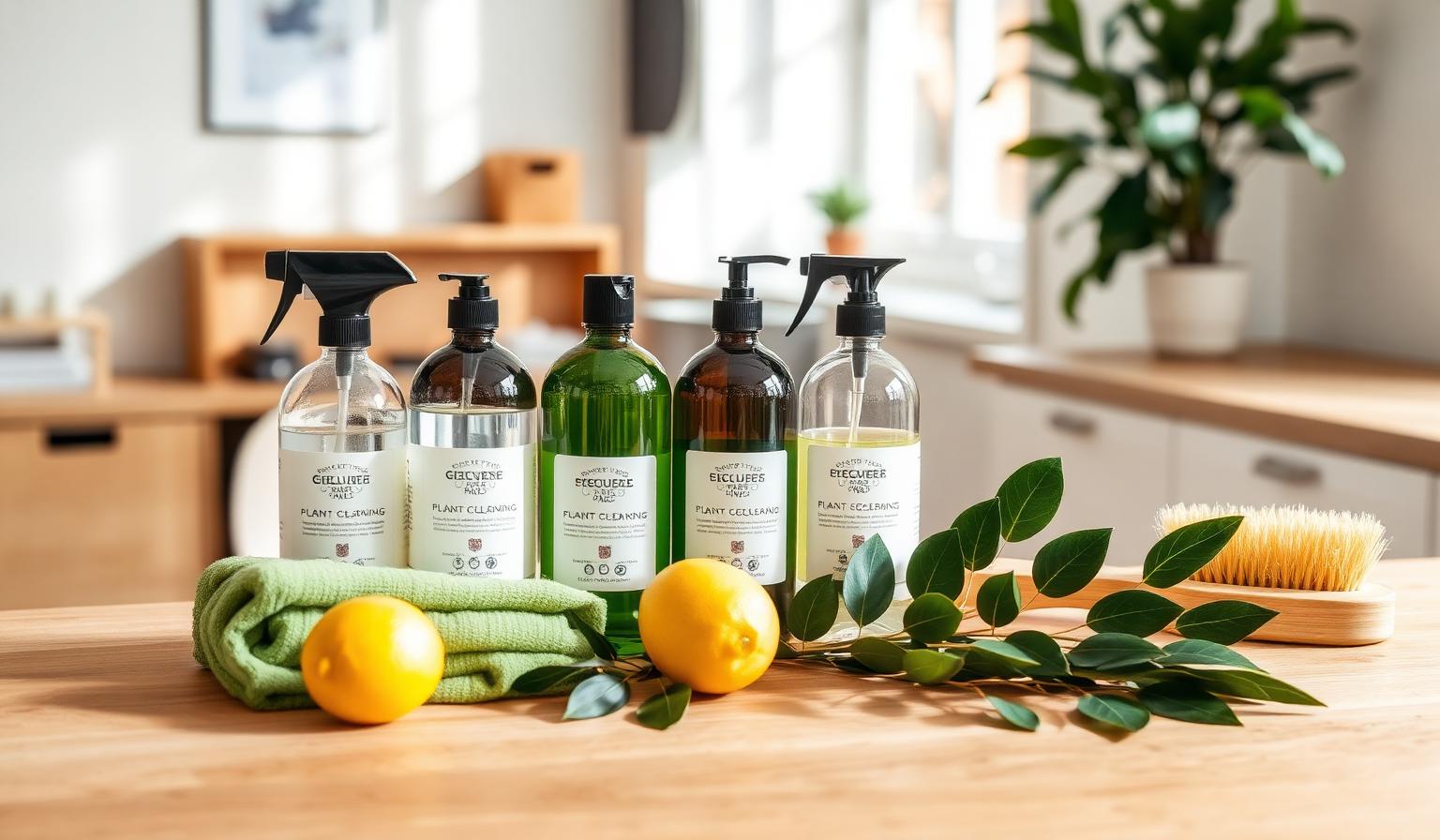
- Green-Seal or EcoLogo certified chemistry by default. Stronger products are still available for specific use cases, but the baseline should not be irritating to employees with asthma or sensitivities.
- Trained, uniformed, background-checked staff. Not subcontractors. Not a rotating cast of strangers in your building at 9 PM.
If your current cleaning program does not check most of these boxes, you have an opportunity to materially improve productivity without changing anything else about how the business operates.
Common mistakes facility managers make
In the dozens of buildings we walk through every year, the same three mistakes show up over and over.
Mistake one: buying on price alone. The cheapest bid is almost always the cheapest because the cleaner has either underestimated the scope or plans to under-deliver. Both end up costing more than paying fair market rate for the right scope.
Mistake two: not adjusting frequency as the business changes. A cleaning scope written when the company had 25 employees and one shared kitchen does not work when the company has 75 employees and a barista bar. We see businesses outgrow their cleaning scope every year and not realize it for six months.
Mistake three: treating cleaning as invisible. Cleaning is invisible when it goes well, but when something slips it should not take three months for anyone to say something. The best cleaning relationships have a regular cadence of feedback — even just a quick monthly check-in — that catches small issues before they become big ones.
How to right-size your program
If you are not sure whether your current cleaning program is delivering productivity ROI, here is the simplest diagnostic we know.
Walk your building on a Tuesday morning at 9 AM, before the day fully ramps up. Look at three things:
1. The first ten feet of every entrance. Is it visibly clean? Are the glass doors streak-free? Is the entry mat in good shape? 2. The restrooms. Are dispensers full? Are surfaces dry? Is there any odor at all? 3. The breakroom. Are the microwave and sink free of food residue? Is the refrigerator handle clean? Are the coffee bar surfaces wiped?
If any of those three zones fails, you are almost certainly losing productivity to your current cleaning program — both directly through reduced employee satisfaction and indirectly through the impression you are making on every visitor.
What we recommend
For most Sioux Falls offices in the 5,000 to 25,000 square foot range, the right starting point is a five-night-per-week service with quarterly carpet extraction and an annual hard-floor refinish. From there we tune frequency up or down based on traffic, industry, and feedback.
Medical, dental, and childcare environments need nightly service without exception, with documented disinfection protocols and visit logs. Manufacturing and warehouse environments need a different mix — typically a smaller nightly footprint focused on offices and common areas, with periodic deep cleans of production zones scheduled around shifts.
Whatever the right answer is for your building, the wrong answer is "what we have always done." Cleanliness is too tied to productivity to leave on autopilot.
The bottom line
A well-designed cleaning program is one of the cheapest ways to make a meaningful improvement in employee satisfaction, retention, and output. It is not a soft perk. It is a hard line item with measurable returns. If you are paying for cleaning, you should be getting that return. If you are not, the fix is usually simple — and almost always pays for itself within a quarter.
If you would like a free walkthrough of your Sioux Falls building and a written recommendation, we are happy to do one. No sales pressure, no obligation. Most of the businesses we walk through end up either tightening their current program or moving to ours, and both outcomes are wins.
Need a cleaner you can actually count on?
Walk your building with us and get a written, flat-rate quote inside one business day.
Get a free estimateKeep reading